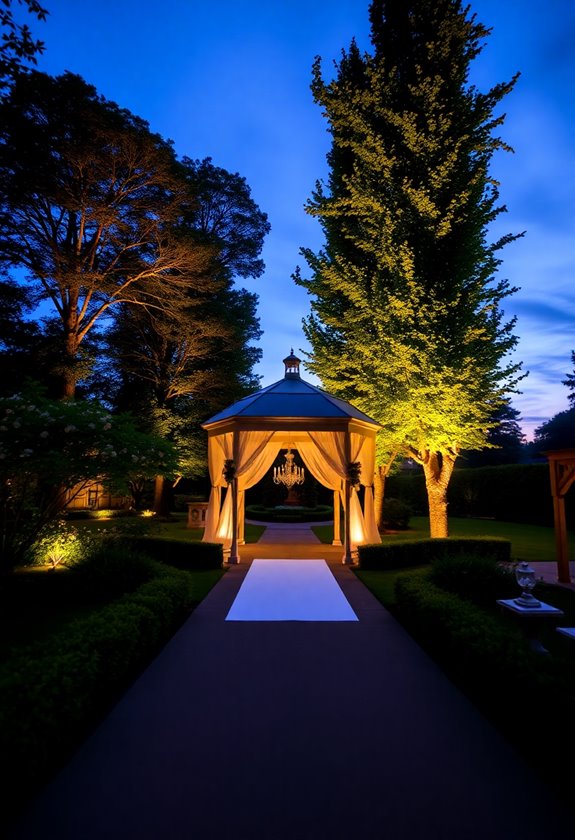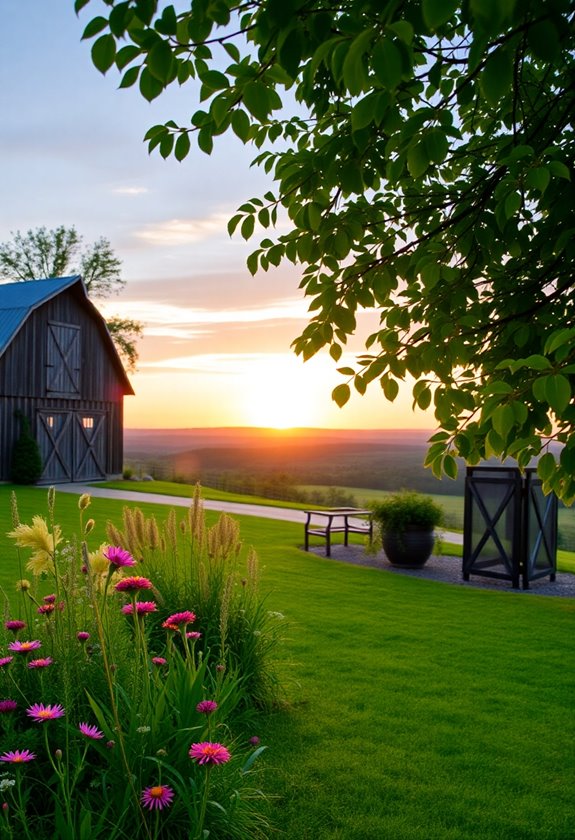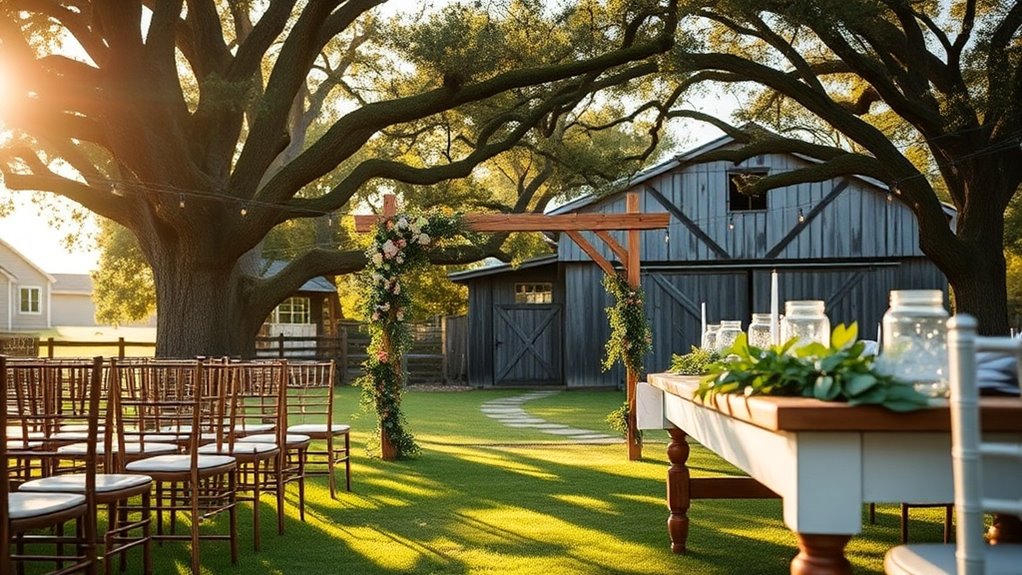
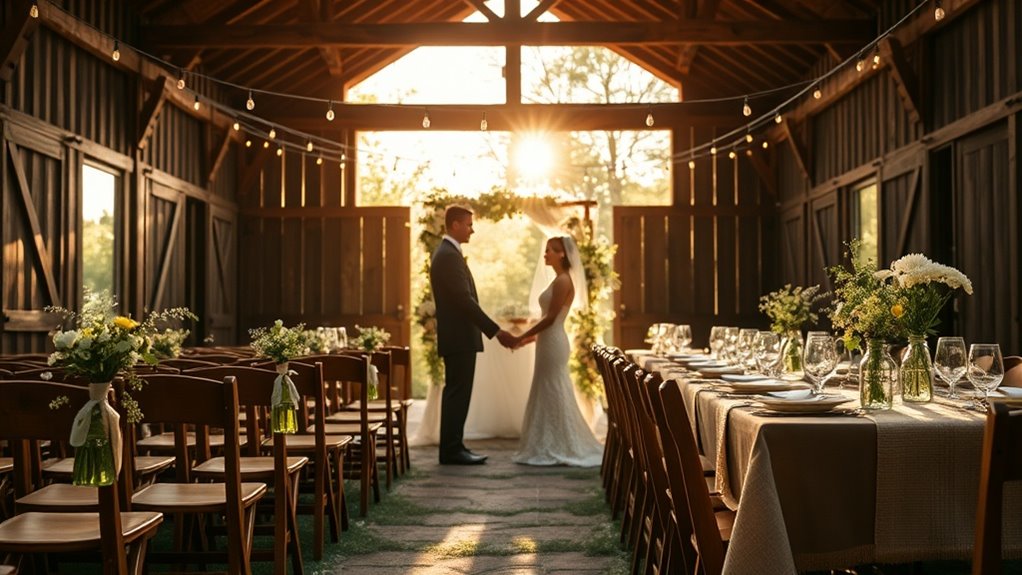
Affordable wedding venues aren’t just about a low rental fee—they’re about total spend, including required vendors, service charges, and gratuities. You’ll save the most by booking off-season months or weekdays, which can slash costs 30-50%. Consider backyards, parks, galleries, or breweries instead of banquet halls. Allocate 30-40% of your total budget to the venue, and always ask what’s included. Below, you’ll uncover the exact strategies and questions that protect your budget.
What Makes a Wedding Venue Actually Affordable
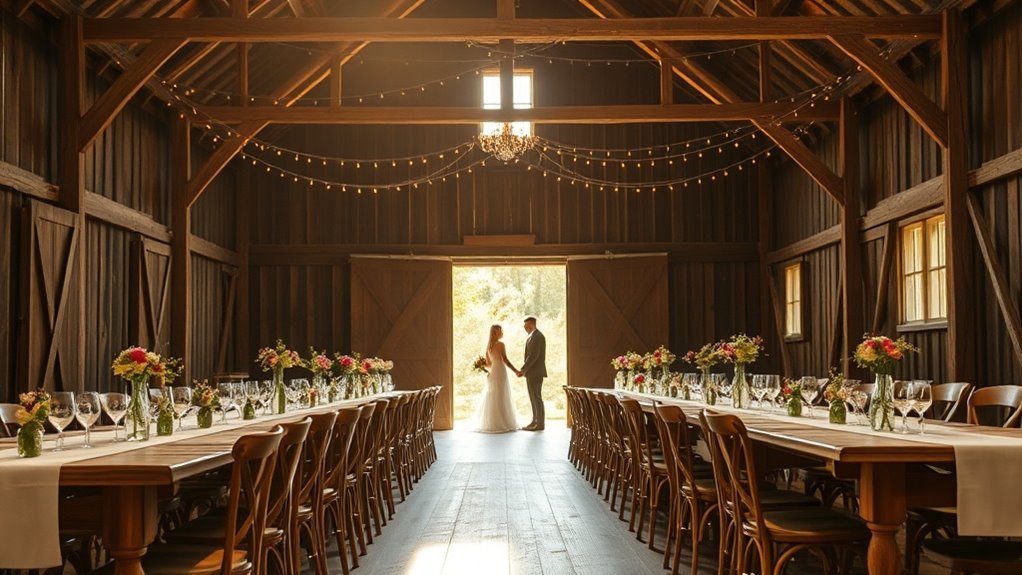
Chasing that “affordable” label can trick you fast, because a low rental fee often hides the real cost of getting married there. True affordability comes from the total spend: rental, required vendors, service charges, taxes, gratuities, overtime, and setup fees. A $2,000 barn that forces you to rent tables, chairs, linens, restrooms, and a generator can easily out-cost a $6,000 all-inclusive venue.
Evaluate a venue against four criteria. First, what’s included—tables, chairs, linens, staff, coordination, and cleanup. Second, vendor flexibility; open-vendor policies let you shop competitively, while preferred lists can inflate prices 20–40%. Third, capacity efficiency—you shouldn’t pay for space you won’t fill. Fourth, timing leverage: off-season dates, Fridays, Sundays, and morning ceremonies typically cut costs 30–50%.
Affordability isn’t the sticker price; it’s the cost per guest after every line item lands. Calculate that number before you tour anywhere.
How to Set a Realistic Venue Budget

Before you can lock in a venue budget, you’ll need to know your total wedding spend—add up every expected cost, from catering to attire, and set a firm ceiling. From there, allocate roughly 30-40% to your venue, which typically eats the biggest slice of the pie. Adjust that percentage based on your priorities: if food matters more than the space, shift the numbers accordingly. Additionally, consider incorporating reusable items into your decor budget to promote cost savings and sustainability.
Calculating Total Wedding Costs
Setting a realistic venue budget starts with knowing your total wedding spend. Before allocating a dime to the venue, calculate every anticipated expense: attire, catering, photography, florals, entertainment, stationery, transportation, officiant fees, rings, and a 10-15% contingency for overlooked costs. Tally guaranteed contributions from family, then subtract that from your target figure to determine your true out-of-pocket commitment.
Once you’ve nailed down the grand total, benchmark it against national and regional averages to gauge whether your expectations align with reality. If they don’t, you’ll need to either raise funds, trim your guest list, or adjust priorities. Document everything in a spreadsheet with fixed and variable columns—this transparency prevents scope creep and gives you the negotiating leverage you’ll need when touring venues.
Allocating Venue Percentage
Once you know your total wedding budget, industry standards suggest earmarking 30-40% for the venue, which typically includes the ceremony site, reception space, and often catering or bar service. To pinpoint your allocation within that range, assess what’s bundled. If the venue provides in-house catering, tables, linens, and staff, lean toward 40%. For a raw space requiring separate rentals and vendors, cap venue costs closer to 25-30% so you’ve got room for those add-ons.
Multiply your total budget by your chosen percentage to establish a hard ceiling, then subtract an estimated 10% buffer for taxes, service fees, and gratuities—line items venues rarely quote upfront. This adjusted figure becomes your true venue shopping number, keeping you from overcommitting before you’ve priced the rest of your wedding.
Cheapest Wedding Venue Types Ranked by Price
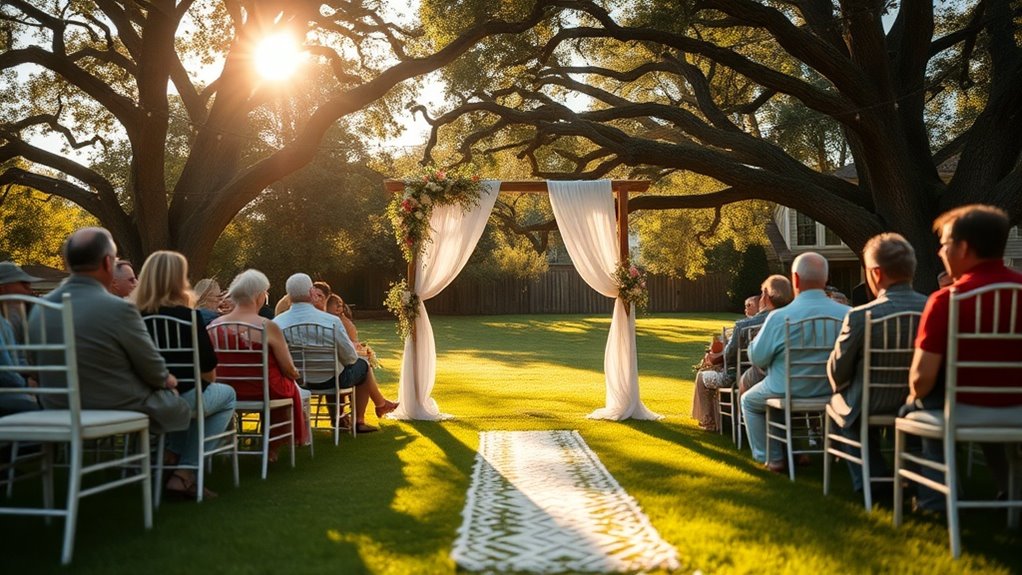
When you’re looking to slash venue costs, backyard and home weddings top the list since you’re paying nothing for the space itself. Public parks and beaches come in a close second, typically requiring only a small permit fee. Both options give you stunning settings without the price tag of a traditional venue. Important to consider – venue accessibility to ensure that all guests can easily enjoy your special day.
Backyard and Home Weddings
Backyard bliss tops the list of budget-friendly wedding venues, often costing you next to nothing. When you host at your own or a relative’s property, you eliminate rental fees entirely and gain complete creative control over layout, timing, and vendor choices.
Factor in hidden costs, though. You’ll likely need to rent tents, tables, chairs, linens, portable restrooms, and a generator—expenses that can climb to $3,000-$5,000. Verify your homeowner’s insurance covers event liability, and check local ordinances for noise limits, permit requirements, and guest capacity restrictions.
Prep the grounds weeks ahead: landscape, address parking logistics, and stage a lighting plan for evening hours. Weather remains your biggest variable, so secure a backup indoor option. Done strategically, you’ll host an intimate celebration for a fraction of traditional venue costs.
Public Parks and Beaches
Beyond your own backyard, public parks and beaches deliver some of the lowest venue costs you’ll find, with permit fees typically ranging from $50 to $500. You’ll secure these locations through your local parks department or municipal recreation office, often six months to a year in advance for prime dates.
Scrutinize the fine print: many permits restrict alcohol, amplified sound, decorations, and guest counts. You’ll also need liability insurance, usually $100 to $200 through event-specific policies.
Factor in logistics you’re inheriting—no built-in restrooms beyond public facilities, no power sources, and zero weather protection. Budget for tent rentals, portable toilets, generators, and shuttle service if parking’s limited.
Choose off-peak weekdays or shoulder seasons to slash competition, and always visit at your ceremony’s exact hour.
Free and Low-Cost Outdoor Wedding Venues
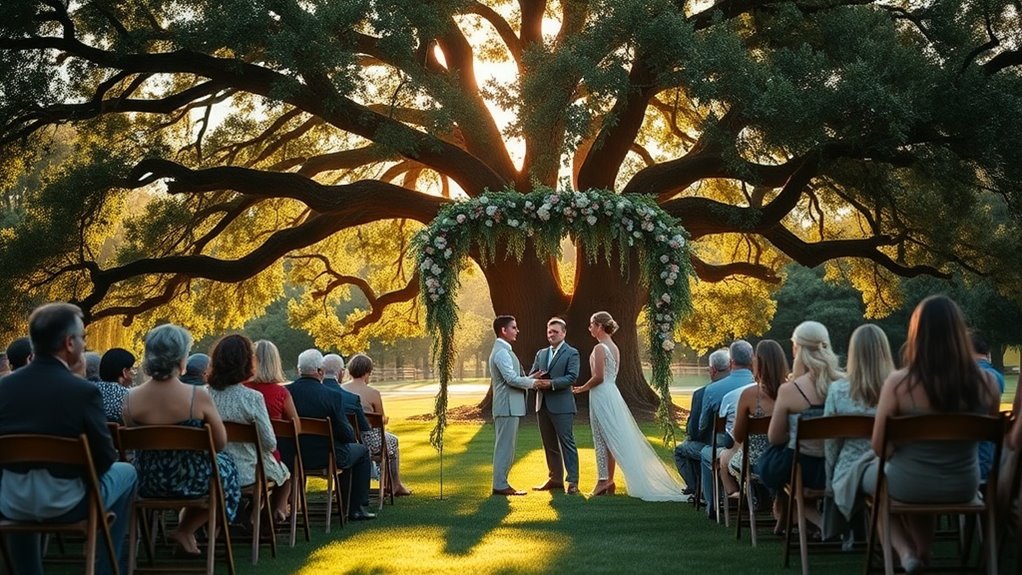
Tying the knot outdoors can slash your venue costs dramatically, especially if you’re willing to skip traditional wedding spots. Beyond public parks and beaches, you’ll find a wealth of underutilized options that charge minimal fees or nothing at all.
Skip the traditional venues and explore hidden outdoor gems—your wallet will thank you for the creative thinking.
Consider state and national forests, where permit fees typically run $50 to $200. Botanical gardens often waive rental fees on weekdays or during off-peak seasons. Community gardens, historic town squares, and municipal rose gardens frequently offer permits under $150.
Don’t overlook private land arrangements. A friend’s backyard, a relative’s farm, or a neighbor’s orchard can deliver stunning backdrops for zero rental cost. Approach landowners directly—many welcome the opportunity in exchange for a modest gift or reciprocal favor.
University campuses, particularly your alma mater’s outdoor quads and chapels, sometimes offer alumni discounts. Vineyards during their quieter months, lakeside campgrounds, and even mountain overlooks accessible by short hikes round out your affordable options. Venues that enhance natural scenery with vibrant flowers and lush greenery will elevate your outdoor wedding experience into the realm of Outstanding. And thats what you want ultimately…isn’t it?
Nontraditional Venue Ideas That Save Thousands
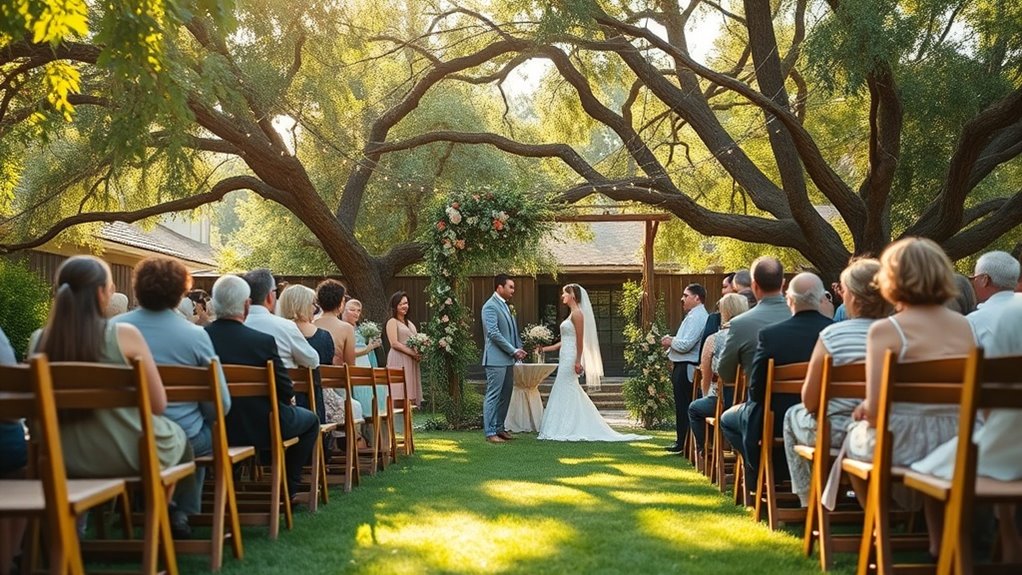
While outdoor spaces offer serious savings, indoor nontraditional venues can cut your costs even further—often by thousands compared to standard wedding halls.
Consider restaurants with private dining rooms; many waive rental fees if you meet a food and beverage minimum, effectively bundling catering into your venue cost. Art galleries, bookstores, and independent theaters typically charge a fraction of banquet hall rates and bring built-in ambiance that eliminates decor spending.
Look into industrial spaces like warehouses, breweries, or distilleries. They’re often available for four-figure sums and include tables, lighting, and staff. Community-run cultural centers, historical society buildings, and museums frequently offer member or off-peak discounts you can leverage.
Don’t overlook university chapels, botanical greenhouses, or your local grange hall—each delivers character without the wedding-industry markup. When you inquire, avoid the word “wedding” initially; you’ll often receive standard event pricing rather than inflated bridal-market quotes.
Off-Season and Weekday Tricks to Slash Venue Costs
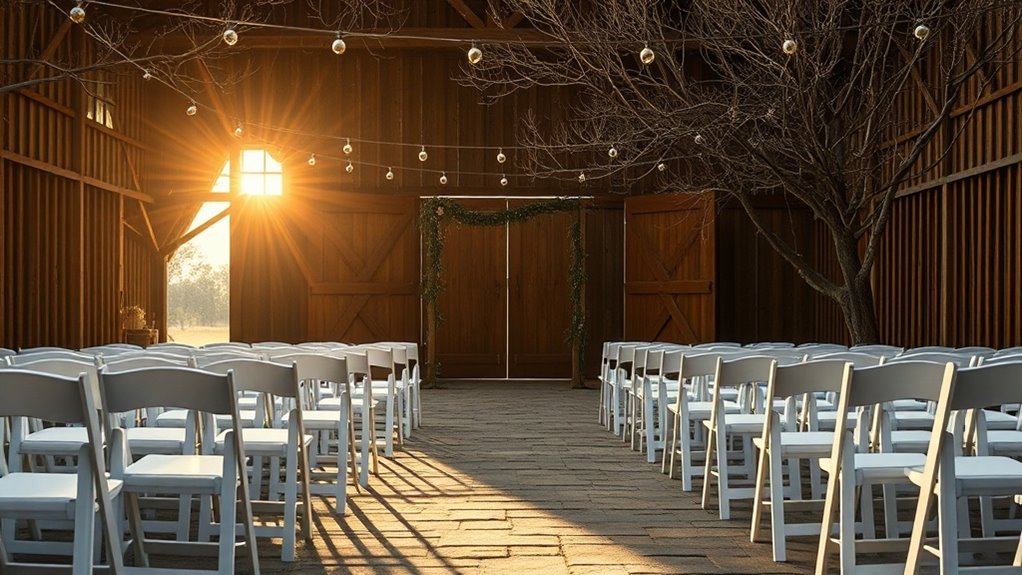
Timing your wedding right can knock 20-50% off venue prices without changing a thing about the space itself. Venues price their calendars based on demand, and you can exploit those pricing tiers if you’re willing to skip Saturday in June.
Here’s where you’ll find the deepest discounts:
- Off-season months (January, February, and November excluding Thanksgiving week) typically slash rates by 30-40%, and you’ll gain negotiating leverage on catering minimums too.
- Weekday weddings (Monday through Thursday) can cut venue fees in half, plus vendors often waive premium pricing since they’d otherwise sit idle.
- Sunday afternoons and Friday mornings offer a middle-ground discount of 20-25% while still feeling like a “weekend” event for guests.
When you inquire, ask directly for the venue’s off-peak calendar and any last-minute cancellation openings. Coordinators quietly discount unbooked dates 60-90 days out, so patience pays real dividends. Also, remember that incorporating natural beauty into your plans can greatly enhance your wedding’s visual appeal without extra costs.
Key Questions That Reveal Hidden Venue Fees

Once you’ve locked in a promising date, the sticker price on that venue contract rarely tells the whole story. Before you sign, drill down with these questions to expose costs buried in the fine print.
The sticker price on that venue contract rarely tells the whole story—drill down before you sign.
Ask what the rental fee actually covers—hours, setup, breakdown, and cleanup often carry separate charges. Clarify whether service fees, gratuities, and administrative surcharges stack on top of the food and beverage minimum, since these can inflate your bill by 20-25%.
Probe corkage, cake-cutting, and vendor meal fees. Confirm overtime rates, security deposits, and liability insurance requirements. Ask about parking, coat check, and valet costs your guests might absorb.
Request specifics on chair upgrades, linen options, and lighting, because “included” packages often deliver bare-bones basics. Verify tax rates, cancellation penalties, and payment schedules.
Frequently Asked Questions
Do Affordable Venues Typically Require Wedding Insurance Coverage?
Yes, you’ll typically encounter wedding insurance requirements at budget-friendly venues, and it’s often non-negotiable. Most affordable spaces mandate liability coverage ranging from $1-2 million to protect against property damage, injuries, or alcohol-related incidents. You’ll pay roughly $150-$550 for a thorough policy, depending on your guest count and coverage limits. Don’t skip this step—verify the venue’s specific requirements early, since securing coverage last-minute can jeopardize your booking or inflate premiums markedly.
Can I Negotiate the Venue Price With the Manager?
Yes, you can negotiate—think of the venue manager as a merchant in a bustling bazaar, where prices bend for the shrewd buyer. Approach with market knowledge: cite competitor rates, request off-peak discounts, or bundle services like catering and rentals. Ask about waived fees, complimentary upgrades, or flexible payment terms. Timing’s your ally—book during slow seasons or last-minute openings. Stay respectful yet firm, and you’ll often access meaningful savings.
How Far in Advance Should I Book an Affordable Venue?
Book your affordable venue 12 to 18 months ahead to secure the best rates and prime dates. If you’re targeting off-peak seasons or weekdays, you can often lock in deals with 6 to 9 months’ notice. Popular venues fill quickly, so early commitment gives you leverage during negotiations. Don’t wait too long—last-minute bookings limit your options and rarely deliver the savings you’re aiming for. Move decisively once you’ve compared quotes.
Are Tips Expected for Venue Staff on the Wedding Day?
Yes, tipping venue staff is like leaving a warm handshake at the end of a beautiful dance—expected and appreciated. You’ll typically tip catering staff 15-20% (check if it’s already included in your contract), bartenders $1-2 per drink or 10%, and coordinators $50-100. Don’t overlook valets or setup crews either. Prepare labeled envelopes beforehand and delegate distribution to a trusted friend, so you’re free to celebrate.
What Happens to My Deposit if I Cancel?
Your deposit’s fate hinges entirely on the venue’s cancellation policy, which you’ll find spelled out in your signed contract. Most venues treat deposits as non-refundable, especially close to your event date. However, some offer tiered refunds based on how far in advance you cancel, while others let you transfer the deposit to a rescheduled date. Always scrutinize these terms before signing, and consider wedding insurance to protect your investment.
Conclusion
Your dream wedding doesn’t have to drain your savings—it just needs a smart strategy. Picture yourself exchanging vows in a sunlit backyard, a rustic barn, or a charming community hall, surrounded by loved ones instead of debt. You’ve got the tools now: budget clarity, creative venue ideas, off-peak timing, and the right questions to ask. So go book that space, seal those savings, and start planning the celebration you’ll actually enjoy paying for.