You don’t need a pricey ballroom to throw a stunning wedding. Consider municipal parks, botanical gardens, beaches, or state parks for permit fees as low as $25 to $500. Backyards, barns, boutique vineyards, and craft breweries slash costs through beverage minimums or family connections. Libraries, museums, galleries, church halls, and restaurant private dining rooms round out affordable picks. Each option carries its own quirks, permits, and hidden savings worth exploring before you book.
Public Parks and Botanical Garden Wedding Venues
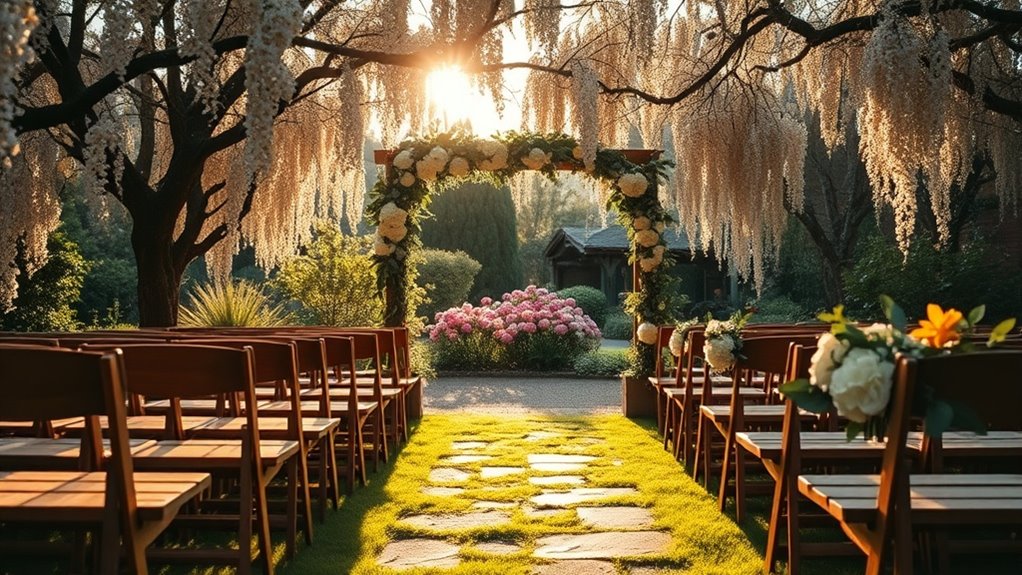
Skip the pricey banquet halls and say “I do” surrounded by blooming roses or towering oaks. Municipal parks typically charge permit fees between $50 and $500, while botanical gardens run $500 to $2,500—a fraction of traditional venue costs that often exceed $10,000.
Trade $10,000 banquet halls for $50 park permits—and exchange vows beneath blooming roses instead of banquet chandeliers.
Book early. Prime gardens fill 12 to 18 months in advance, especially during peak bloom seasons. Contact your city’s parks department directly rather than relying on wedding directories; you’ll uncover lesser-known gazebos, rose gardens, and waterfront pavilions that competitors haven’t discovered.
Read the fine print carefully. Restrictions often govern amplified music, alcohol service, decor anchoring, and guest counts. Some parks require you to hire approved caterers or secure event insurance—factor these into your budget.
Leverage the natural backdrop. When your ceremony unfolds beneath established landscaping, you’ll spend minimal on floral arrangements and photography enhancements, redirecting funds toward priorities that matter most.
Beaches, Lakesides, and State Park Ceremonies
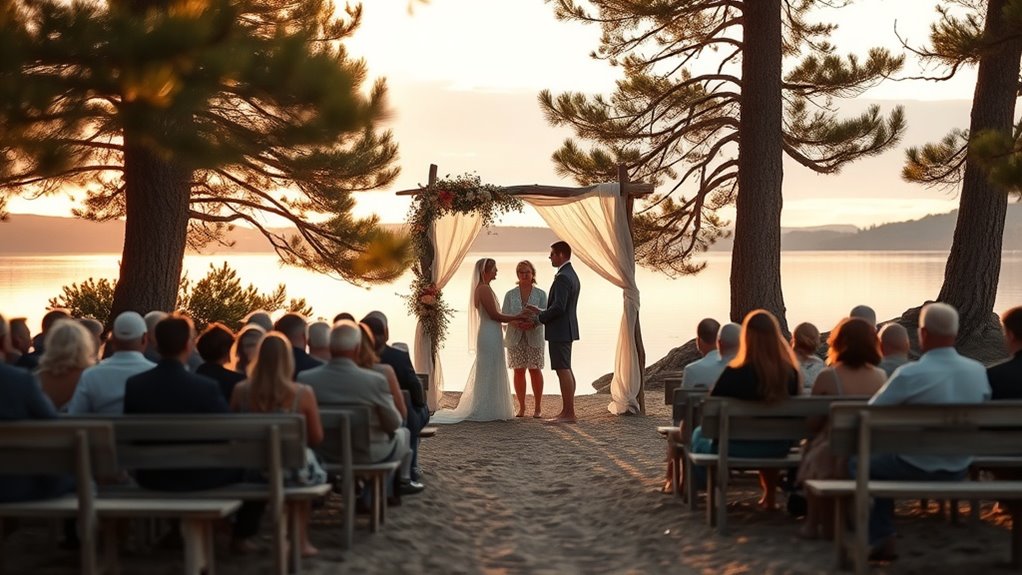
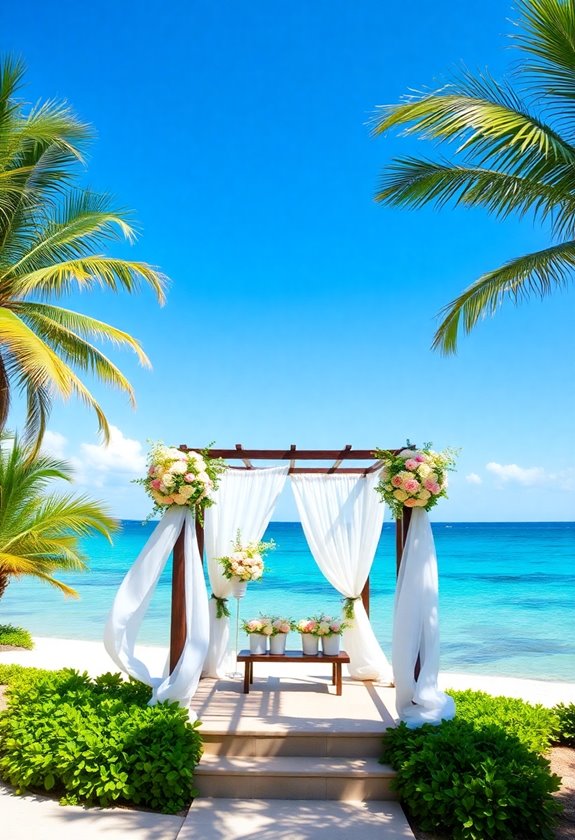
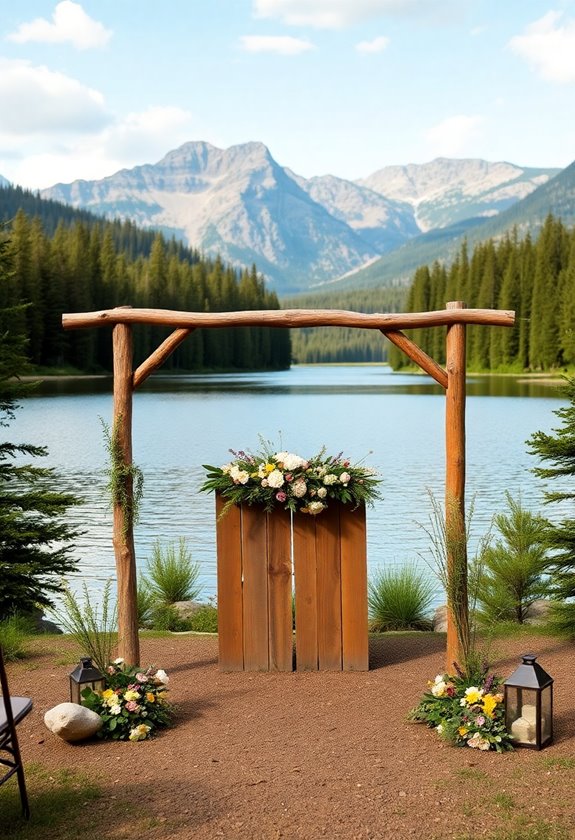
If you’re drawn to nature, beaches, lakesides, and state parks offer stunning ceremony settings for a fraction of traditional venue costs. You’ll typically need a permit, with fees ranging from $25 to a few hundred dollars depending on location and guest count. In exchange, you’ll gain access to scenic backdrops—crashing waves, glassy lakes, or towering trees—that no decorator can replicate.
Permits and Fee Basics
Before you fall in love with a shoreline ceremony or a pine-shaded overlook, check what the location actually costs on paper. Most state parks charge a special-use permit ranging from $50 to $300, while municipal beaches often add a per-hour rental on top of a base application fee. Request the current fee schedule in writing and confirm what’s included: parking passes, restroom access, and setup windows vary widely.
Watch for hidden line items—refundable damage deposits, liability insurance requirements (typically $1M coverage), amplified-sound surcharges, and alcohol permits. Book six to twelve months out for prime dates; some agencies open reservations exactly one year prior. Get every approval in writing, and verify whether your officiant, photographer, or vendors need separate commercial-use permits before showing up onsite.
Scenic Natural Backdrops
Nature does the decorating for free, which is why beaches, lakesides, and state parks top nearly every budget-wedding shortlist. You’ll leverage what’s already there: driftwood aisles, pine canopies, granite outcrops. Scout your site at the exact ceremony hour, one week prior, to confirm sun angles, tide schedules, and shadow patterns your photographer will exploit.
Prioritize venues offering existing infrastructure—restrooms, parking, ADA paths—since retrofitting these costs more than the permit itself. Coastal state parks often waive amplification fees if you use battery-powered speakers under 60 decibels. Lakeside pavilions frequently include picnic tables that double as reception seating.
Build weather contingencies into your contract language. Reserve a nearby community hall for a nominal hold fee, and you’ll sidestep the tent-rental spiral that destroys most outdoor budgets.
Family Backyards and Private Backyard Weddings
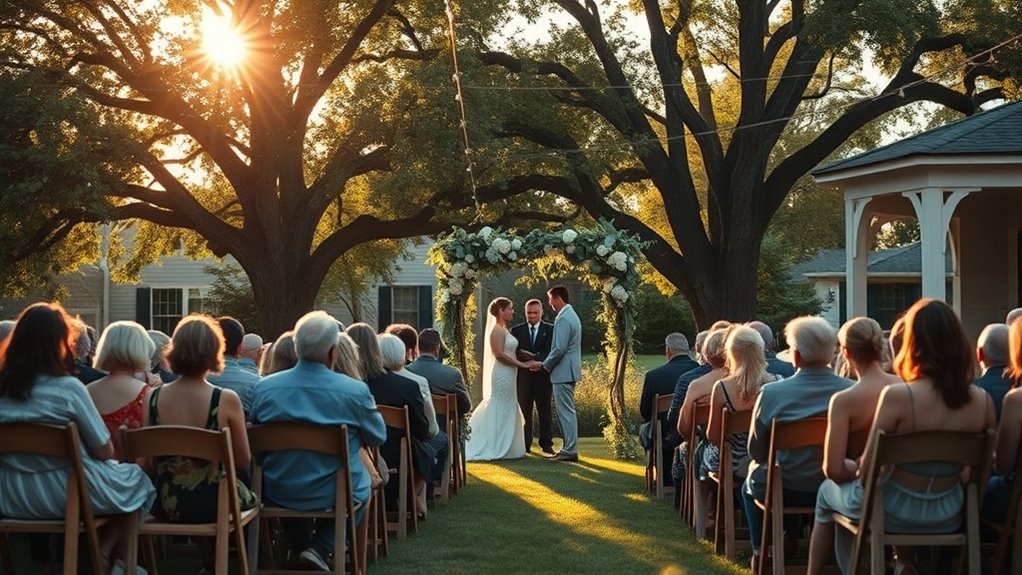
Hosting your wedding in a family backyard blends sentimental charm with serious savings, letting you say “I do” where memories already live. Before you send invites, though, you’ll want to check local permits and noise ordinances so the celebration doesn’t hit a legal snag. You’ll also need a solid rental checklist—think tents, tables, restrooms, and lighting—to transform the space into a true venue.
Sentimental Setting Advantages
Why exchange vows in a rented hall when your grandmother’s backyard holds decades of family memories? A familiar setting infuses your ceremony with emotional resonance no rented venue can replicate. Guests recognize the oak tree where you climbed as a child, the porch where relatives gathered, the garden your grandfather cultivated. These landmarks become silent witnesses, transforming ordinary spaces into extraordinary backdrops charged with meaning.
You’ll also gain practical psychological advantages. Familiarity reduces pre-ceremony anxiety, letting you focus on your partner rather than unfamiliar logistics. Elderly relatives navigate comfortably, children play in known territory, and photographs capture authentic connections rather than staged formality.
Consider the narrative you’re crafting: your union becomes another chapter in a location already rich with your family’s history, adding depth impossible to purchase.
Permits and Noise Rules
Before you send invitations, check your local municipality’s rules on residential gatherings. Many jurisdictions cap outdoor guest counts, restrict amplified sound after specific hours (often 10 p.m.), or require temporary event permits once you exceed a threshold—typically 50 to 100 attendees. Contact your city clerk’s office directly rather than relying on outdated online summaries.
Homeowners’ associations add another layer. Review your covenants for restrictions on tents, parking, and commercial vendors like caterers or valets.
Notify neighbors two to three weeks ahead. A brief note listing the date, end time, and your phone number preempts noise complaints that can shut down your reception. Consider inviting immediate neighbors as goodwill.
Finally, hire a sound engineer who’ll monitor decibel levels, ensuring your playlist stays within legal limits without killing the dance floor.
Rental Essentials Checklist
With permits squared away, you’ll need to fill the yard with everything a functioning venue provides by default. Start with seating: ceremony chairs, reception chairs, and enough tables for guests, gifts, cake, bar, and buffet. Add a tent sized to your guest count plus buffer for weather contingency, along with sidewalls if forecasts turn.
Don’t overlook the invisible infrastructure: portable restrooms (one per 35 guests, minimum), a generator sized to your power draw, extension cords, and adequate lighting for after sundown. Rent linens, glassware, flatware, and china unless you’re going disposable.
Budget for a dance floor if your lawn is uneven, plus climate control—fans, heaters, or misters—matched to season. Finalize a delivery and pickup schedule that accommodates setup, teardown, and your neighbors’ patience.
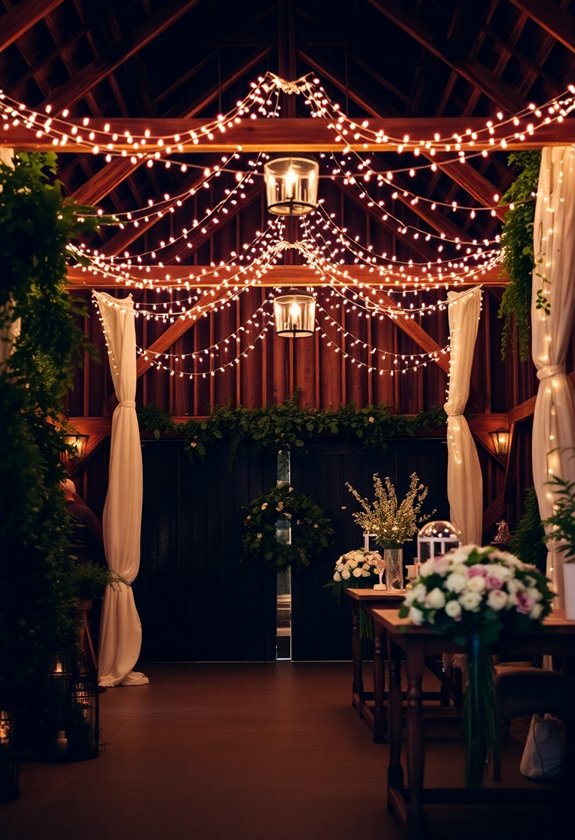
Working Farms and Rustic Barn Venues
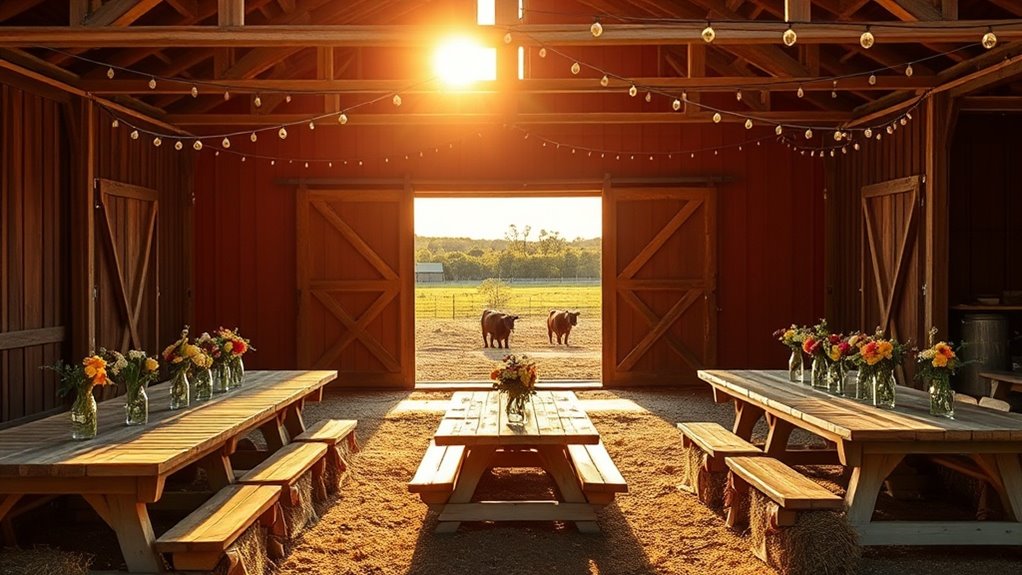
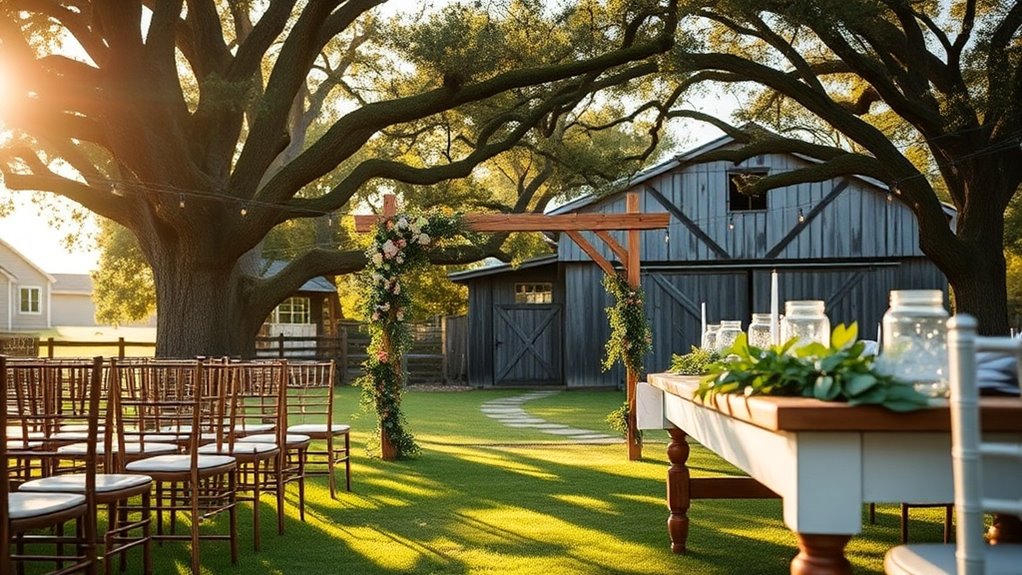
Skip the ballrooms and head out to the countryside, where working farms and rustic barns offer serious charm at a fraction of the cost. Many family-run operations rent their space for $500 to $2,000—well below traditional venue markups—because hosting weddings supplements their agricultural income rather than driving it.
Negotiate directly with the owner and you’ll often secure perks corporate venues won’t touch: full weekend access, on-site parking, and permission to bring your own vendors. Ask about existing infrastructure—covered barns, restrooms, electrical hookups, and a level ceremony site—since these amenities determine your real budget more than the base rental fee.
Vet the property carefully. Check the barn’s structural condition, confirm liability insurance requirements, and walk the grounds during weather similar to your date. Ask whether livestock will be present, how noise ordinances apply, and where guests will park after rain. Due diligence here prevents rustic charm from becoming logistical chaos. Please remember this also: Make very sure that the venue you finally choose has easy parking and pathways to accommodate all guests, including those with mobility challenges.
Vineyards and Small-Batch Brewery Weddings
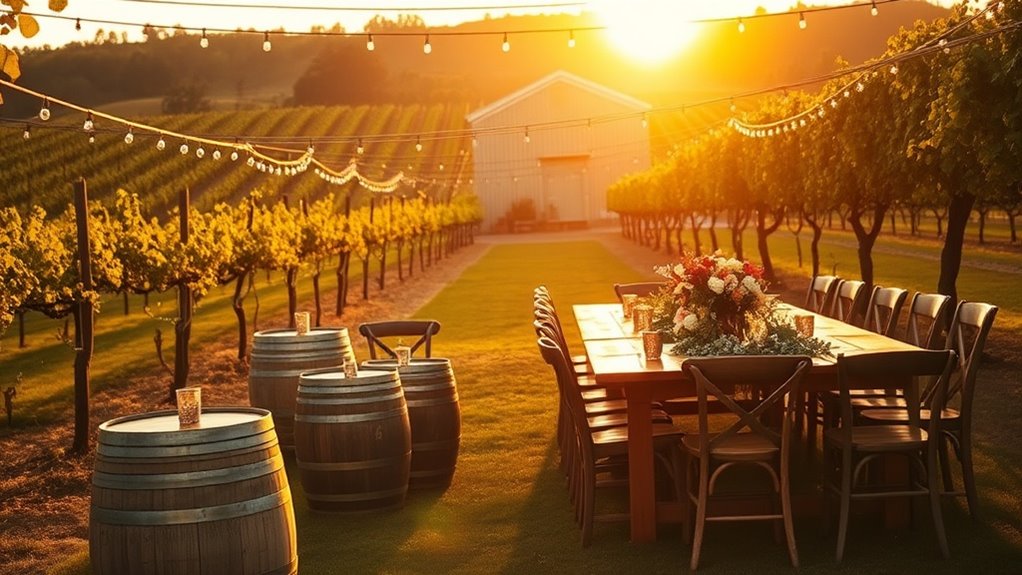
Craft breweries and boutique vineyards have caught on to the wedding market, and many still charge far less than dedicated event spaces. You’ll often find that smaller operations, especially those newer to hosting events, offer weekday or off-season rates well below the regional average—sometimes waiving site fees entirely if you meet a beverage minimum.
Leverage these three tactics to maximize value:
- Target venues under three years old. Emerging producers actively court weddings to build portfolios and press.
- Book Friday or Sunday afternoons. Rates typically drop 30–50%, and vendors often mirror those discounts.
- Negotiate a beverage-minimum-only agreement. You’ll skip the rental fee and control per-guest costs directly through consumption.
Confirm what’s included: some vineyards provide tables, string lighting, and staff, effectively eliminating three line items from your budget. Ask about corkage waivers, in-house catering partnerships, and whether the tasting room converts to a rain-plan reception space.
Community Centers and Recreation Halls
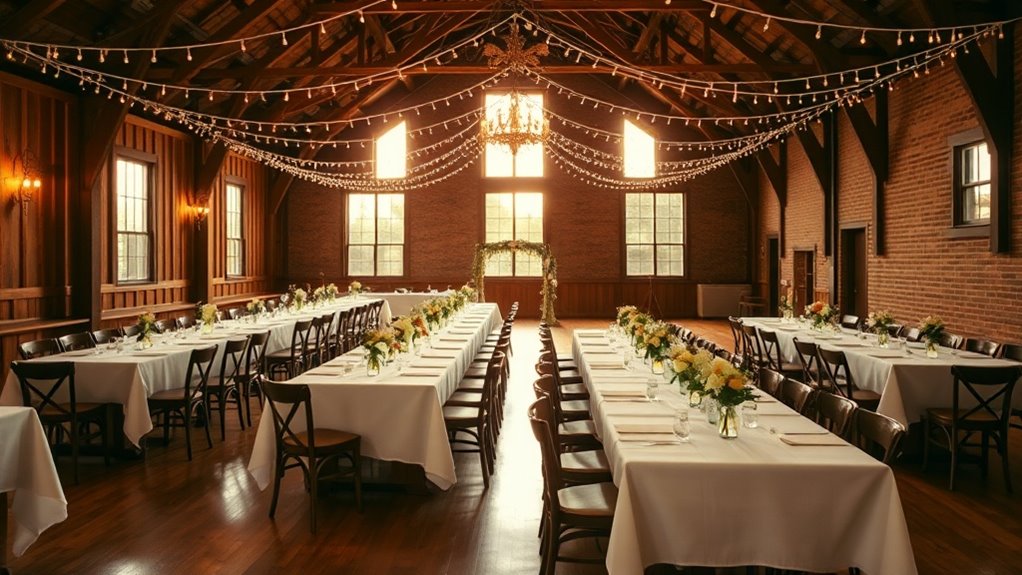
If vineyard charm isn’t your style, community centers and recreation halls offer serious budget wins. You’ll find rental rates that are a fraction of traditional venues, often just a few hundred dollars for the entire day. Plus, these spaces are highly flexible, letting you configure the layout to fit your guest count and vision.
Affordable Rental Rates
Many community centers and recreation halls charge just a fraction of what traditional wedding venues demand, often between $50 and $500 for a full day’s rental. You’ll find these rates dramatically undercut hotel ballrooms and dedicated event spaces, freeing thousands from your budget for catering, photography, or your honeymoon.
Before you sign a rental agreement, verify these cost-affecting factors:
- Residency discounts — Many municipalities slash fees by 30-50% if you or a family member lives within district boundaries.
- Off-peak pricing — Friday evenings, Sunday afternoons, and winter months typically command lower rates than Saturday bookings.
- Included amenities — Confirm whether tables, chairs, kitchen access, and setup time are bundled or billed separately.
Negotiating these variables strategically can reduce your venue expense below $300.
Flexible Space Options
Beyond their budget-friendly rates, community centers and recreation halls give you room to shape the day around your vision. Most facilities offer open floor plans you can configure for a ceremony, cocktail hour, and reception within a single footprint—eliminating transportation logistics and gaps in your timeline.
You’ll typically find movable partitions, stackable seating, and multipurpose rooms that adapt to guest counts ranging from 50 to 300. Need a separate space for the bridal party, a children’s area, or a lounge? Adjacent rooms handle those needs without upcharges.
Kitchens are often included, letting you hire independent caterers or coordinate potluck-style receptions. Outdoor courtyards, patios, and adjoining parks extend your options further, giving you ceremony backdrops and photo locations that rival dedicated venues at a fraction of the cost.
Local Libraries and Historic Museum Spaces
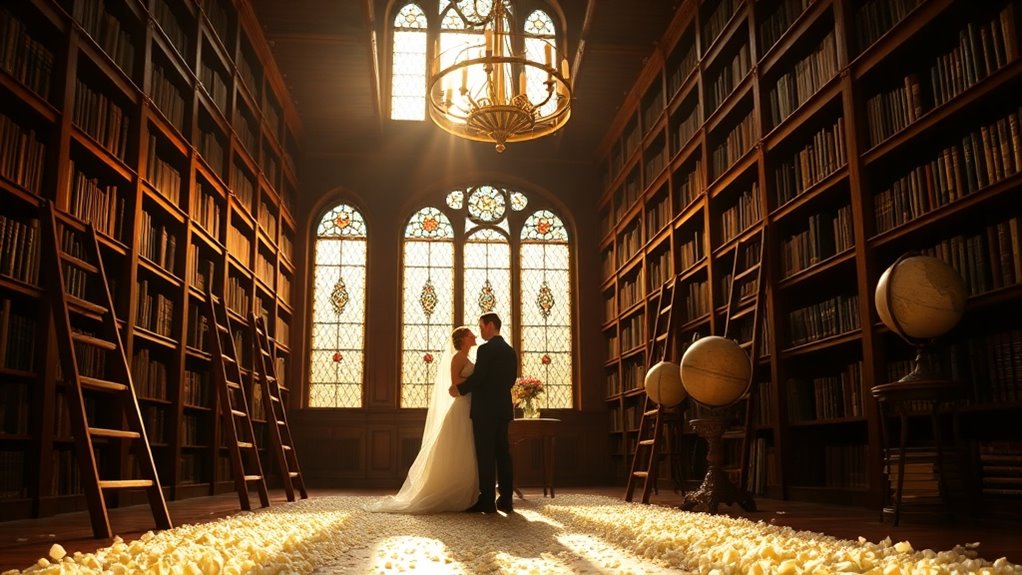
Tucked away in nearly every town, local libraries and historic museums offer wedding venues that combine charm, character, and surprisingly low rental fees. You’ll find vaulted ceilings, ornate architecture, and built-in atmosphere that eliminate the need for extensive décor. Many of these institutions rent their spaces specifically to offset operational costs, meaning your booking directly supports community preservation. Incorporating eco-friendly decorations can enhance the rustic charm of these unique spaces.
Before you commit, evaluate these critical factors:
- Restrictions on catering, alcohol, and open flames — museums often prohibit red wine near artifacts and require approved vendors.
- Capacity and accessibility limits — historic buildings may lack elevators or have strict occupancy codes.
- Availability windows — you’ll typically book after operating hours, which can compress your setup timeline.
Contact your local historical society, university library, or small-town museum directly. Rates frequently range from $500 to $2,500, well below traditional venues, and negotiation’s often possible for weekday or off-season dates.
Art Galleries and Independent Studio Venues
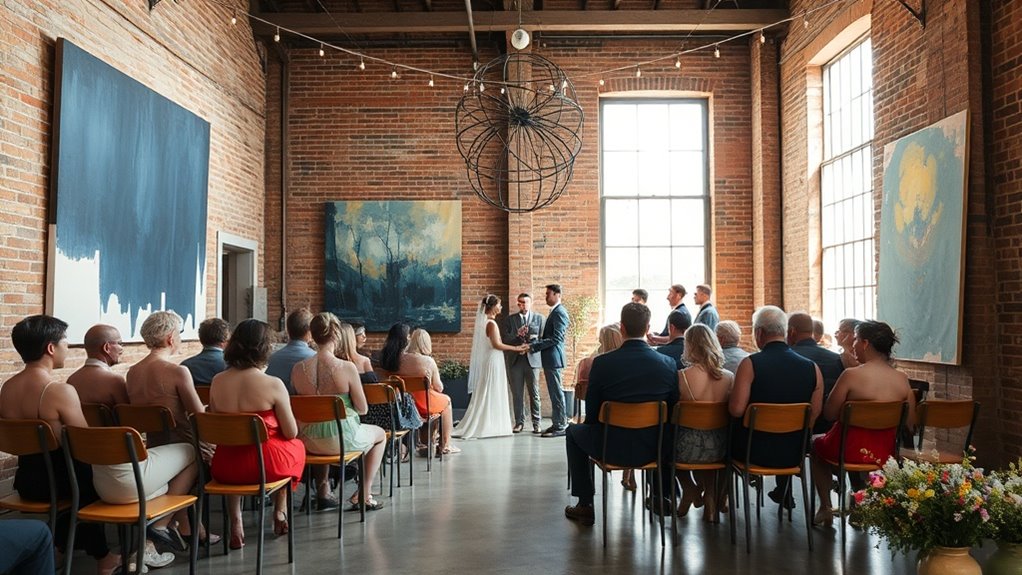
If you want a venue that doubles as décor, art galleries and independent studios deliver built-in visual drama at a fraction of traditional costs. Rotating exhibitions become your backdrop, sparing you thousands in florals and lighting rentals. Expect rental fees between $500 and $2,500 for a weekday or Sunday evening—significantly less than dedicated event spaces.
Art galleries turn rotating exhibitions into your event backdrop, replacing costly florals and lighting with built-in visual drama.
Target smaller galleries, artist collectives, and warehouse studios in emerging arts districts. These operators often welcome private bookings to supplement their programming budgets. Photography studios and ceramics co-ops frequently rent their raw industrial spaces on off-days.
Negotiate strategically: offer to credit the resident artists in your program, or purchase a piece as part of your contract. That gesture often secures discounts and flexible terms. Additionally, consider incorporating seasonal floral décor to enhance the ambiance without breaking the bank.
Verify practical logistics before signing—kitchen access, restroom capacity, insurance requirements, and load-in windows vary widely. Confirm whether you can adjust artwork placement or if pieces stay fixed throughout your event.
Restaurants With Private Dining Rooms
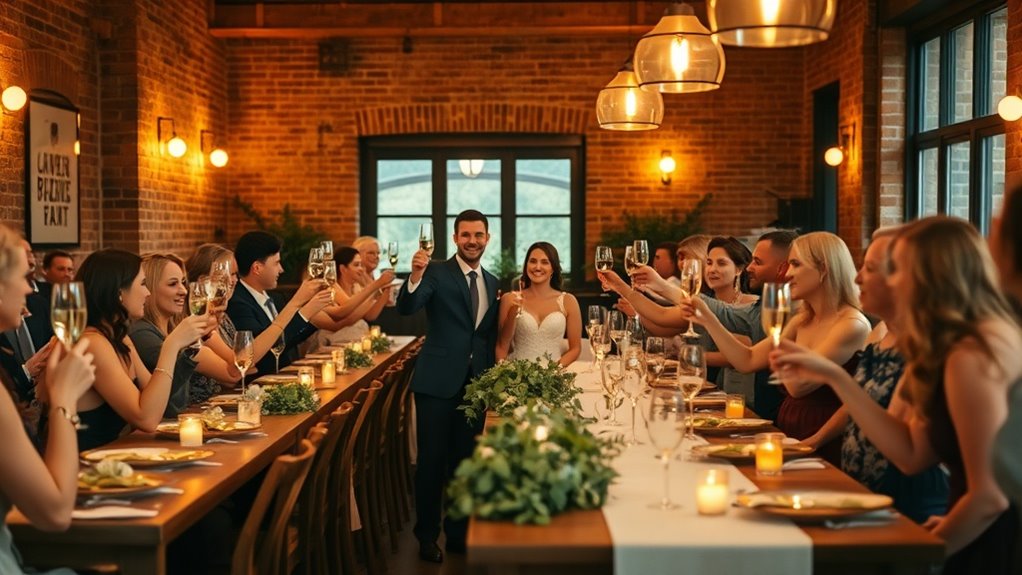
Restaurants with private dining rooms let you skip venue rental fees entirely, since most waive them when you hit a food-and-beverage minimum. That threshold typically runs $1,500–$5,000 depending on the city and day, which you’d spend on catering anyway. You’re effectively getting the space free while consolidating vendors—no separate caterer, bartender, or rental company to coordinate.
Target these establishments for maximum value:
- Ethnic restaurants (Italian, Mexican, Indian) often offer family-style menus at $25–$45 per person, dramatically lower than dedicated venues.
- Brewpubs and gastropubs include craft beverages in-house, eliminating corkage fees and bar setup costs.
- Lunch or brunch bookings slash minimums by 40–60% compared to Saturday dinner slots.
Negotiate the minimum as net of tax and gratuity to know your true food budget. Confirm whether you can bring outside cake, decor, or a DJ—policies vary, and restrictions can quietly inflate costs. Additionally, if you ask and are willing to pay for it, many restaurants can provide flower arrangements that enhance the dining atmosphere.
Church Halls and Small Wedding Chapels
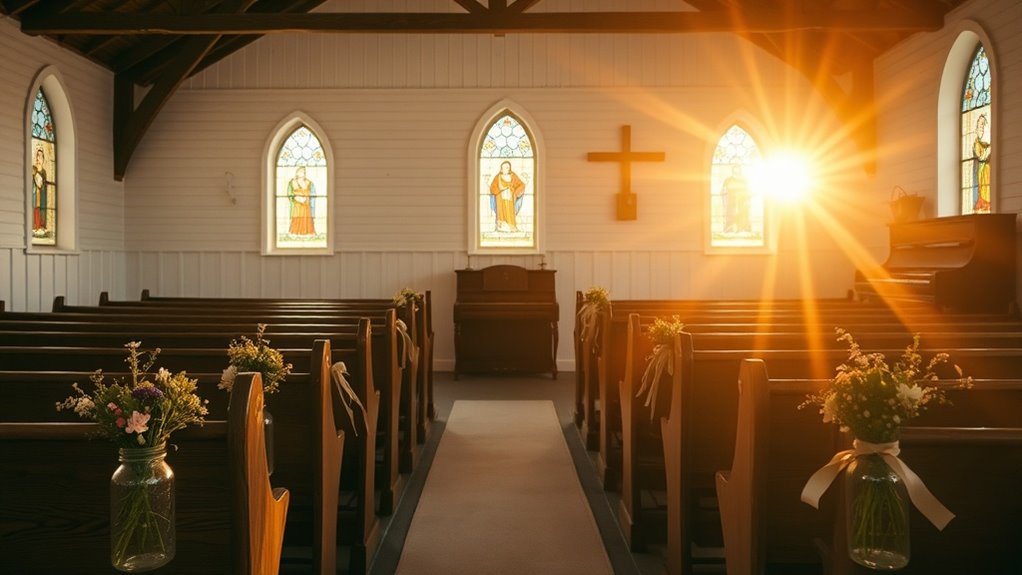
Church halls and small wedding chapels routinely rent for $200–$800, making them one of the cheapest ceremony-and-reception options available. You don’t need to be a congregant at most Protestant, Unitarian, or non-denominational venues, though some require a brief meeting with the officiant or a modest donation on top of the rental fee.
Book directly through the church office rather than a wedding coordinator to skip markup. Ask what’s included: many halls throw in tables, folding chairs, a commercial kitchen, and basic AV at no extra cost—line items that’d add $1,500+ elsewhere.
Verify alcohol policies before signing. Some faiths prohibit it entirely; others allow beer and wine with a permit. If you’re hosting the reception on-site, confirm capacity, parking, and setup windows, since Sunday services often dictate a hard Saturday-night cleanup deadline.
Historic chapels also photograph beautifully, giving you upscale imagery without the country-club price tag.
Frequently Asked Questions
How Far in Advance Should We Book an Inexpensive Wedding Venue?
Book your venue 9-12 months ahead to secure the best rates and availability, especially if you’re targeting peak season (May-October). For off-peak dates or unconventional spaces like community halls, parks, or restaurants, you can often negotiate 4-6 months out. Popular budget venues fill quickly, so don’t delay once you’ve toured your top choices. Booking 12-18 months early sometimes locks in current pricing before annual rate increases hit your budget.
Do Budget Venues Typically Require Wedding Insurance or Liability Coverage?
Like Odysseus preparing for uncertain seas, you’ll want protection before your big day. Yes, most budget venues require liability coverage, typically $1-2 million, plus host liquor liability if you’re serving alcohol. You’ll pay $150-$300 for a one-day policy through providers like WedSafe or Markel. Don’t skip this—venues often mandate proof before handing over keys. Read your contract carefully, since some require additional insured endorsements naming the property owner.
What Hidden Fees Should Couples Watch for at Affordable Venues?
You’ll want to scrutinize contracts for cleaning fees, overtime charges, corkage and cake-cutting fees, gratuities auto-added to catering, and service charges layered atop rentals. Watch for setup/breakdown costs, security deposits that aren’t fully refundable, mandatory vendor lists with markups, and parking or valet minimums. Don’t overlook power surcharges for outdoor sites, permit fees, insurance riders, and taxes calculated on inflated subtotals. Always demand an itemized quote before signing.
Can We Negotiate Pricing With Owners of Non-Traditional Wedding Venues?
Absolutely, and many non-traditional venue owners report flexibility on pricing, unlike hotels or dedicated event spaces. I once went to Venice Italy on the Off-season to have a vacation. Hotel prices were over 50% off…most were more than 60%. You’ve got real leverage here—negotiate off-peak dates, weekday bookings, or multi-day rentals for substantial discounts. Bundle services, offer to handle your own vendors, or propose reduced deposits. Owners of barns, galleries, and private estates often prioritize filling their calendar over rigid pricing, so you’ll find they’re remarkably receptive to reasonable counteroffers.
How Do We Handle Catering Restrictions at Low-Cost Venues?
Tackle catering restrictions by first clarifying whether the venue mandates in-house catering, an approved vendor list, or charges outside-vendor fees. If you’re locked in, negotiate menu customizations and per-plate pricing tiers. When approved lists apply, request tastings from each option and leverage competing quotes. For fee-based restrictions, calculate whether hiring your preferred caterer still beats the total cost. Always secure licensing, insurance, and kitchen-access details in writing before signing.
Conclusion
Your wedding doesn’t need a Gatsby-sized budget to feel like a fairy tale. Whether you’re saying “I do” beneath a botanical canopy, toasting in a vineyard, or dancing barefoot in your grandmother’s backyard, you’ve got options far beyond the beaten path. Like Dorothy discovered, sometimes the magic’s been in your own backyard all along. So think outside the ballroom, trust your instincts, and let your love story write its own unforgettable setting.